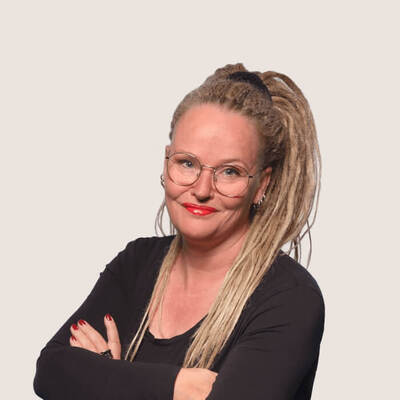
Anne-Mieke is an accessibility strategist who knows empathy matters, but nothing motivates a business owner like quietly losing revenue or drowning in support costs. After years of fixing broken websites, she now mentors software companies, agencies, and e-commerce teams to build for everyone, backed by real data. On stage or with a dev team, her focus is the same: turning technical requirements into measurable business growth, because accessibility is simply smart business.
Workshop
Thursday 12 November
[ENG] Beyond the mouse: Practical CMS Accessibility for developers and UI designers
CMS backends bring together navigation, forms, dialogs, notifications, and editorial controls in workflows that people use every day. A problem in one interaction can make the entire task confusing or impossible, while the source of that problem may be difficult to recognize from the visual interface alone. In this hands-on workshop, developers and UI designers will test realistic editorial tasks with a keyboard and will additionally get a practical introduction to testing with voice control and a screen reader. We will follow complete workflows, from navigating the backend and editing content to handling errors and publishing a page. What happens during those tasks will help us trace accessibility issues back to the design, HTML, ARIA, and interactive behavior. Developers will learn what to look for when they investigate what failed, recognize the likely cause in the code, apply an appropriate fix, and find reliable implementation guidance when the answer is less obvious. For UI designers, the workshop adds an accessibility perspective to decisions they already make about interaction states, focus behavior, contrast, navigation order, instructions, and feedback. This shared understanding improves the design and developer handoff. Expected behavior can be defined earlier, developers spend less time filling in the gaps, and potential accessibility issues are caught before they begin delaying development or testing. Attendees will leave with a practical checklist they can use during design reviews, development, testing, CMS configuration, and product selection, along with reliable sources for investigating and fixing the issues they find. The workshop is relevant to developers and UI designers working with any CMS. No previous accessibility specialization is required. Participants should bring a laptop. Bringing a test instance of a CMS they work with will make the exercises more relevant, but it is not required.
Talk
16:00 · Creator Track
[ENG] One Skill. Serious Market Value. Why Accessible CMS Backends Are Your Next Differentiator.
Most accessibility conversations stop at the frontend. The backend, the interface where content actually gets made, is almost never part of that conversation. That is a problem, and it is becoming a legal and financial one. In this session, Anne-Mieke Bovelett makes the case that an inaccessible CMS backend is not just bad UX. It is a barrier to employment, it causes high support costs, it's a compliance risk under disability employment law, …and it is a gap in the market that developers with the right skills can fill. The session uses a demo to show what happens when a content editor tries to do their job using only a keyboard, or with voice control. Not because those users are rare, but because they are more common than most developers assume. These are the same people who end up calling support when the interface breaks on them, and those support hours are not free. A CMS backend built with accessibility as a baseline means fewer mistakes during content entry, fewer support tickets, and less time spent explaining where things are or why something is not working. The return on that investment is measurable, and it lands directly on the client's bottom line. The session also covers disability employment law. Many countries legally require companies above a certain size to employ a set percentage of people with disabilities, or pay a financial levy instead. If a company is required by law to employ someone with a disability, and their internal tools are inaccessible, they cannot fulfil that obligation. The CMS backend is part of that picture. And then there is AI. A lot of people in the industry are quietly assuming that AI will eventually take care of accessibility, or replace the human doing content entry altogether. This session explains exactly why neither of those things is true, and why the demand for developers who understand accessible interface design is only going to grow.